
Capacity Building in Islamic Microfinance for Business Officers Concludes Successfully in Afghanistan
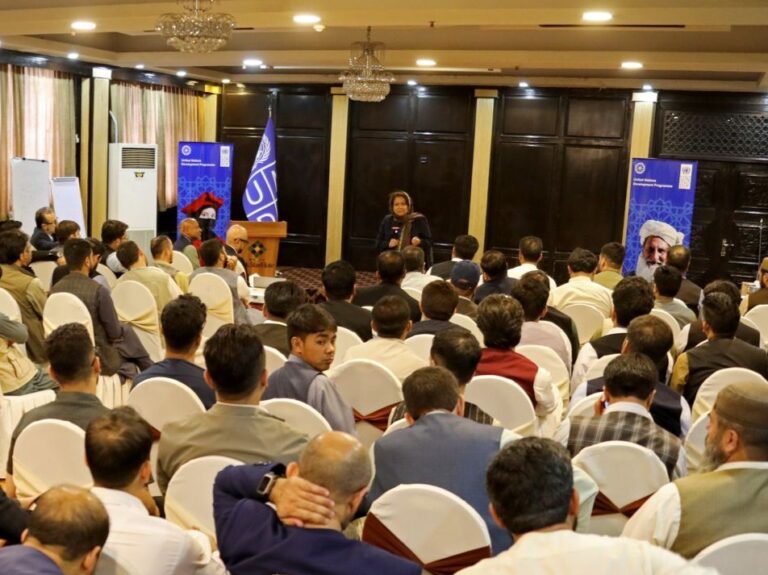
28 July 2026 – Sixty-four business officers from banks and microfinance institutions across Afghanistan have strengthened their capacity to deliver Shariah-compliant financial services through a five-day Islamic Microfinance Training organized by the United Nations Development Programme (UNDP) and its partners. The initiative is part of ongoing efforts to promote financial inclusion, strengthen Afghanistan’s financial sector, and support economic recovery by increasing access to Islamic finance.
The training was conducted from 19 to 23 July 2026 through the collaboration of the UNDP Afghanistan Country Office, the UNDP Istanbul International Center for Private Sector in Development (ICPSD), and the Global Islamic Finance and Impact Investing Platform (GIFIIP), a joint global initiative of UNDP and the Islamic Development Bank (IsDB). A total of 64 participants completed the programme and became eligible to receive certificates, including 51 participants who attended in person and 13 participants who joined online.
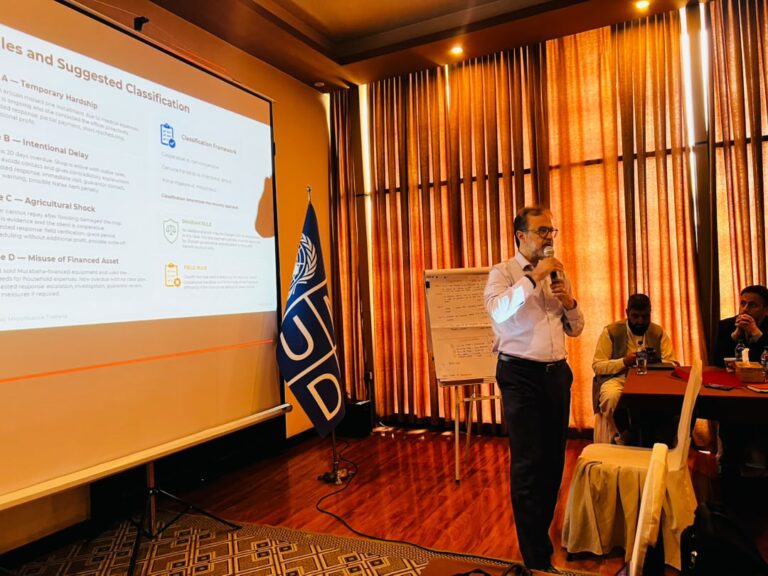
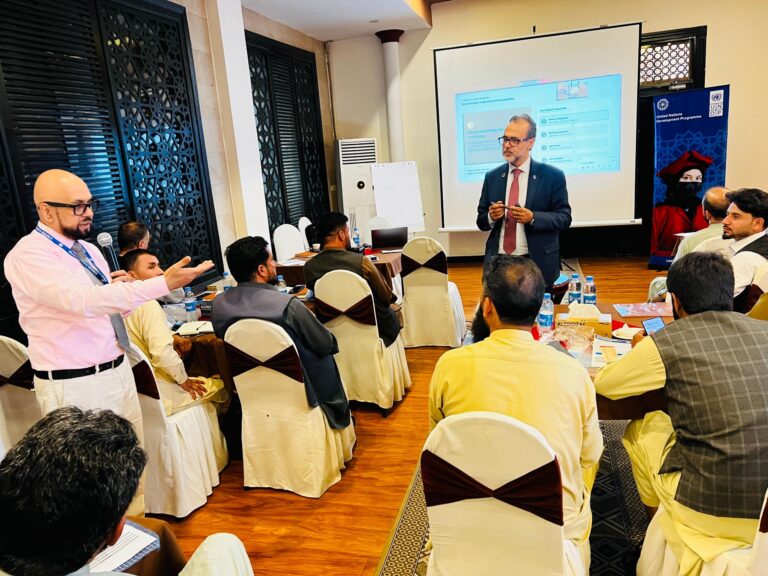
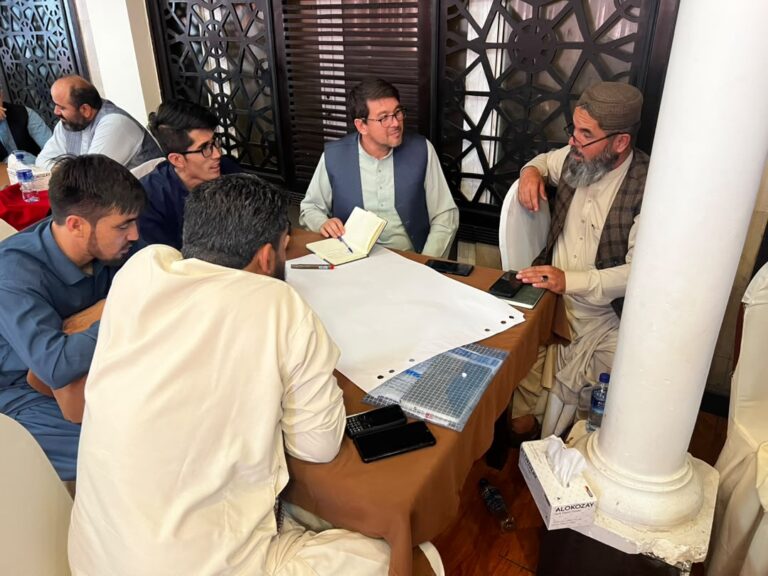
Designed specifically for business officers working in banking and microfinance institutions, the programme provided participants with a practical understanding of microfinance fundamentals, Islamic finance principles, and governance considerations relevant to microfinance operations. Through technical presentations, interactive discussions, practical examples, and case-based exercises, participants enhanced their understanding of Islamic financing products and their application in day-to-day operations.
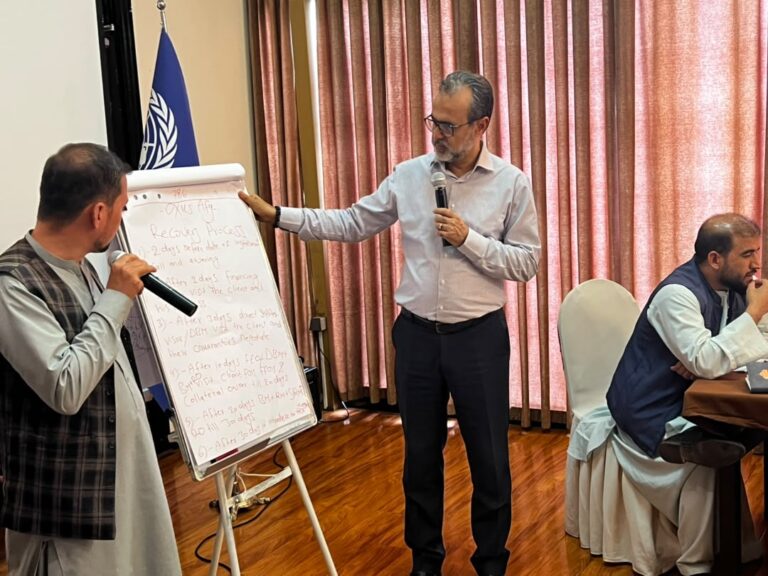
The programme also covered key operational processes, including financing workflows, client assessment procedures, documentation requirements, financing approvals, disbursement mechanisms, portfolio monitoring, and recovery practices. Participants explored approaches to applying Shariah-compliant financing solutions while maintaining operational efficiency and client-centered service delivery.
A significant component of the training focused on risk management in Islamic microfinance operations. Participants examined credit, operational, and portfolio risks, as well as product-specific risks associated with Murabaha, Salam, and Ijara financing. The sessions equipped participants with practical tools to identify, manage, and mitigate risks while ensuring compliance with Islamic finance principles and industry best practices.
Islamic microfinance plays an important role in expanding financial inclusion by providing Shariah-compliant financial services that align with the preferences and needs of communities seeking Islamic financial solutions. Strengthening the capacity of financial institutions in this area can help broaden access to finance, support entrepreneurship, and create economic opportunities, particularly for underserved populations across Afghanistan.
Throughout the five-day programme, participants engaged in interactive learning activities that connected theory with practice, enabling them to strengthen their technical knowledge and perform their professional responsibilities more effectively.
“Microfinance institutions play a vital role in supporting Afghanistan’s economic recovery, expanding livelihoods, and creating jobs across communities,” said Dr. Doel Mukerjee, Deputy Resident Representative of UNDP Afghanistan. “By investing in the capacity of financial professionals, we are supporting key partners who contribute to a more inclusive and resilient economy. I encourage participants to share the knowledge gained through this training with their colleagues and communities, helping to expand awareness of and access to Islamic microfinance services throughout the country.”
Participants also highlighted the practical value of the programme in strengthening their professional skills and improving service delivery.
“The training provided practical insights into both the operational and Shariah dimensions of Islamic microfinance,” said Hamidullah, a participant working for a newly established MFI. “The case studies and interactive discussions will directly support our work with clients and help us apply Islamic financing products more effectively.”
The training concluded with a wrap-up session and closing remarks highlighting the importance of skilled financial professionals in expanding access to finance, supporting entrepreneurship, and contributing to economic development across Afghanistan.
The programme forms part of broader efforts by UNDP and its partners to strengthen the country’s financial ecosystem and enhance the capacity of institutions providing inclusive and Shariah-compliant financial services. By equipping business officers with practical knowledge and skills, the initiative contributes to building a more resilient financial sector capable of supporting sustainable livelihoods and economic growth nationwide.
About UNDP
The United Nations Development Programme (UNDP) is the United Nations’ lead development agency, working in more than 170 countries and territories to help eradicate poverty, reduce inequalities, and build resilient nations. In Afghanistan, UNDP supports inclusive economic development, livelihoods, financial inclusion, climate resilience, and community-based recovery efforts to improve the lives of people across the country. The UNDP Istanbul International Center for Private Sector in Development (ICPSD) serves as UNDP’s global policy center on private sector engagement for sustainable development. The Center develops and disseminates knowledge, builds partnerships, and supports innovative approaches that leverage private-sector contributions to achieve the SDGs.
About GIFIIP
The Global Islamic Finance and Impact Investing Platform (GIFIIP) is a joint initiative of the United Nations Development Programme (UNDP) and the Islamic Development Bank (IsDB) that promotes the use of Islamic finance and impact investing solutions to advance sustainable development, financial inclusion, and the achievement of the Sustainable Development Goals (SDGs).