
- This event has passed.
UNDP contributed to 5th International Conference on Islamic Civilization in Southern Africa and the Indian Ocean Islands
September 14 @ 08:00 - 17:00 UTC+3
11-13 September 2026 | Republic of Mauritius
The United Nations Development Programme (UNDP) contributed to the 5thInternational Conference on Islamic Civilization in Southern Africa and the Indian Ocean Islands, held in Mauritius from 11 to 13 September 2026. The conference was jointly organized by the Human Welfare League (Mauritius), the General Secretariat of the Organisation of Islamic Cooperation (OIC), the Research Centre for Islamic History, Art and Culture (IRCICA), International Institute of Islamic Thoughts (IIIT) and the National Awqaf Foundation of South Africa (Awqaf SA).
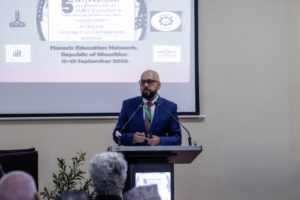
Representing UNDP, Dr. Muniruddeen Lallmahomood, Lead of UNDP’s Istanbul International Center for Private Sector in Development (IICPSD) Islamic Finance portfolio, delivered a presentation titled “A Maqāṣid al-Sharīʿah-Based Framework for Measuring the Performance of Waqf: Repositioning Waqf as Living Islamic Heritage and a Tool for Socio-Economic Transformation in Sub-Saharan African Economies.” The presentation explored how a Maqāṣid al-Sharīʿah-based approach can strengthen the assessment of waqf performance and enhance the contribution of waqf institutions to socio-economic development across Sub-Saharan Africa.
In addition to his presentation, Dr. Lallmahomood actively contributed to conference discussions and knowledge-sharing sessions on Islamic heritage, education, governance, and socio-economic transformation. His interventions emphasized the importance of robust measurement frameworks, multi-stakeholder partnerships, and the alignment of Islamic social finance instruments with the Sustainable Development Goals (SDGs). Through its participation, UNDP reaffirmed its commitment to advancing innovative Islamic finance solutions and supporting the development of inclusive, resilient, and sustainable economies through initiatives such as GIFIIP.
The conference brought together a diverse group of scholars, researchers, policymakers, community leaders, waqf practitioners, educators, and representatives of international organizations from Africa, the Indian Ocean region, and beyond. Through presentations, panel discussions, and knowledge-sharing sessions, participants explored the historical, cultural, educational, and developmental dimensions of Islamic civilization while identifying opportunities for greater collaboration across regions. The event highlighted the continued relevance of Islamic institutions and values in addressing contemporary socio-economic challenges and underscored the importance of innovative approaches to heritage preservation, education, and sustainable development. The strong engagement of participants reinforced the conference’s role as an important platform for advancing dialogue, research, and partnerships that can contribute to inclusive and resilient development outcomes across the region.